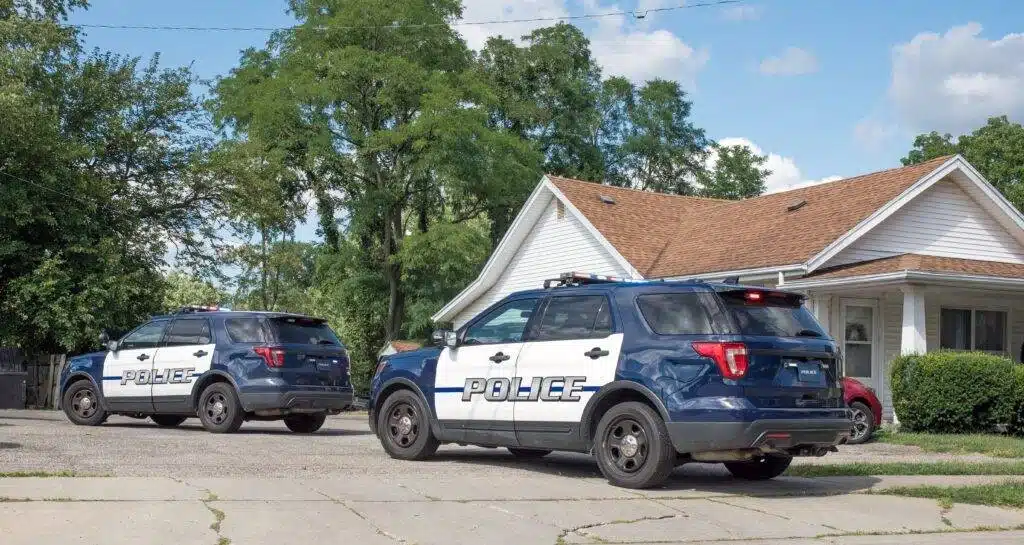

If you’ve been accused of domestic violence in Colorado, a new law is changing how police respond to those calls. House Bill 26-1009, the Colorado Mandatory Lethality Assessment Act, passed both chambers of the Colorado legislature in spring 2026 and has been sent to the governor. Once signed, it will require every law enforcement officer in the state to conduct a standardized screening when responding to a domestic violence incident.
For anyone facing DV charges, understanding this Colorado domestic violence lethality assessment law could affect everything from your arrest to how the prosecution builds its case.
What Is a Lethality Assessment?
A lethality assessment is a structured screening tool that uses evidence-based questions to gauge whether a domestic violence situation is at high risk of turning fatal. The tool has been available to Colorado law enforcement since 2020, and roughly 44 of the state’s 64 counties were already using it voluntarily. What HB 26-1009 does is end that patchwork approach. Beginning July 1, 2027, mandatory lethality screening will be required statewide for every peace officer responding to a domestic violence call.
What Questions Do Colorado Police Ask During a Lethality Assessment?
Under HB 26-1009, officers are required to ask 11 standardized, research-based questions at the scene. Publicly reported questions include whether a weapon was used or threatened, whether the suspect has made threats to kill, whether a gun is accessible in the home, whether strangulation has occurred, the frequency of physical violence in the past year, and whether the victim has recently tried to end the relationship.
Officers don’t administer the assessment if the victim is unavailable, incapacitated, or if circumstances otherwise make it impractical. Participation is voluntary on the victim’s part—but if the assessment happens, the results go directly into the incident report.
How Does a Lethality Assessment Affect Whether You Get Arrested?
Colorado already has one of the strictest mandatory arrest policies in the country. Under C.R.S. § 18-6-803.6, if a peace officer determines there’s probable cause to believe a domestic violence offense occurred, they must arrest the predominant aggressor without discretion or warnings. That hasn’t changed.
What the new law adds is a second layer. If the lethality assessment indicates a “high-risk victim”—or if the officer makes that determination based on the totality of circumstances—the officer must immediately connect the alleged victim with a community-based advocate at the scene. That escalation doesn’t directly change the charge you face, but it signals to prosecutors, judges, and pretrial services that officers viewed the situation as potentially lethal. That framing can influence bail decisions, the terms of your mandatory protection order, and the prosecution’s overall posture toward your case.
Can a Lethality Screening Be Used as Evidence Against You?
This is one of the most important questions for anyone whose case involves the new protocol. The assessment results must be included in the officer’s incident report—a discoverable document that prosecutors will review and may offer as part of the state’s case.
How much weight it carries depends on the specifics. The assessment is a questionnaire administered to the alleged victim, not your statement and not a forensic finding. A skilled DV defense attorney in Denver can challenge how the tool was administered, the accuracy of the responses, and whether the officer’s risk determination was justified. The tool was designed as a victim-safety instrument, not a guilt-finding mechanism, and that distinction matters.
How Colorado's New DV Law Changes the Way Domestic Violence Charges Are Filed
Under Colorado domestic violence law, a DV charge isn’t a standalone crime—it’s a sentence enhancer attached to an underlying offense such as assault, harassment, or criminal mischief. The definition under C.R.S. § 18-6-800.3 is broad, covering not just physical violence but any act or threatened act against an intimate partner used to coerce or control. For more on how domestic violence charges are classified in Colorado, the firm’s blog breaks that down in detail.
What HB 26-1009 changes is what happens in the minutes after officers arrive. Officers are now required to administer the 11-question screening, document the risk level in the official incident report, and immediately connect alleged high-risk victims with an advocate on the scene. That’s more structured documentation than existed before, and all of it feeds into the Colorado domestic violence charges process from the very first moment of contact.
What Should You Do If the New Lethality Assessment Process Was Used in Your Case?
The Colorado domestic violence charges process doesn’t wait. Cases are fast-tracked. A mandatory protection order is issued before you’ve had a chance to speak with anyone, and the documentation police generated at the scene—including any lethality assessment—is already in prosecutors’ hands.
Get a Denver DV defense attorney involved as early as possible. That means before you make any statements, before you agree to anything, and before you assume the scene documentation is a fixed part of the record that can’t be challenged. The lethality assessment is a new feature of how Colorado police document DV calls in 2026—but it’s a tool, and like any other piece of evidence, it can be examined, contextualized, and contested.
If the new lethality assessment protocol was part of your case, the attorneys at MBS Law are ready to review what happened and help you understand your options. Reach out to our team for a consultation.
References
https://leg.colorado.gov/bills/HB26-1009
https://law.justia.com/codes/colorado/title-18/article-6/part-8/section-18-6-803-6/
https://law.justia.com/codes/colorado/title-18/article-6/part-8/section-18-6-800-3/
https://www.kunc.org/politics/2026-02-19/colorado-lawmakers-want-police-to-take-new-steps-when-responding-to-domestic-violence-calls